Wilmersdorf’s Open-Air Wok: How Preußenpark Became Berlin’s Legendary Thai Street Food Meadow
Follow the rhythmic thud of heavy wooden pestles and the intoxicating perfume of charred bird’s eye chilies, kaffir lime, and sizzling pork fat as you emerge from the red-brick modernist colonnades of Fehrbelliner Platz U-Bahn station. Within two hundred meters, the quiet, bourgeois streets of Wilmersdorf surrender to an olfactory explosion that transports you straight from central Berlin to a bustling night market along the Chao Phraya River.
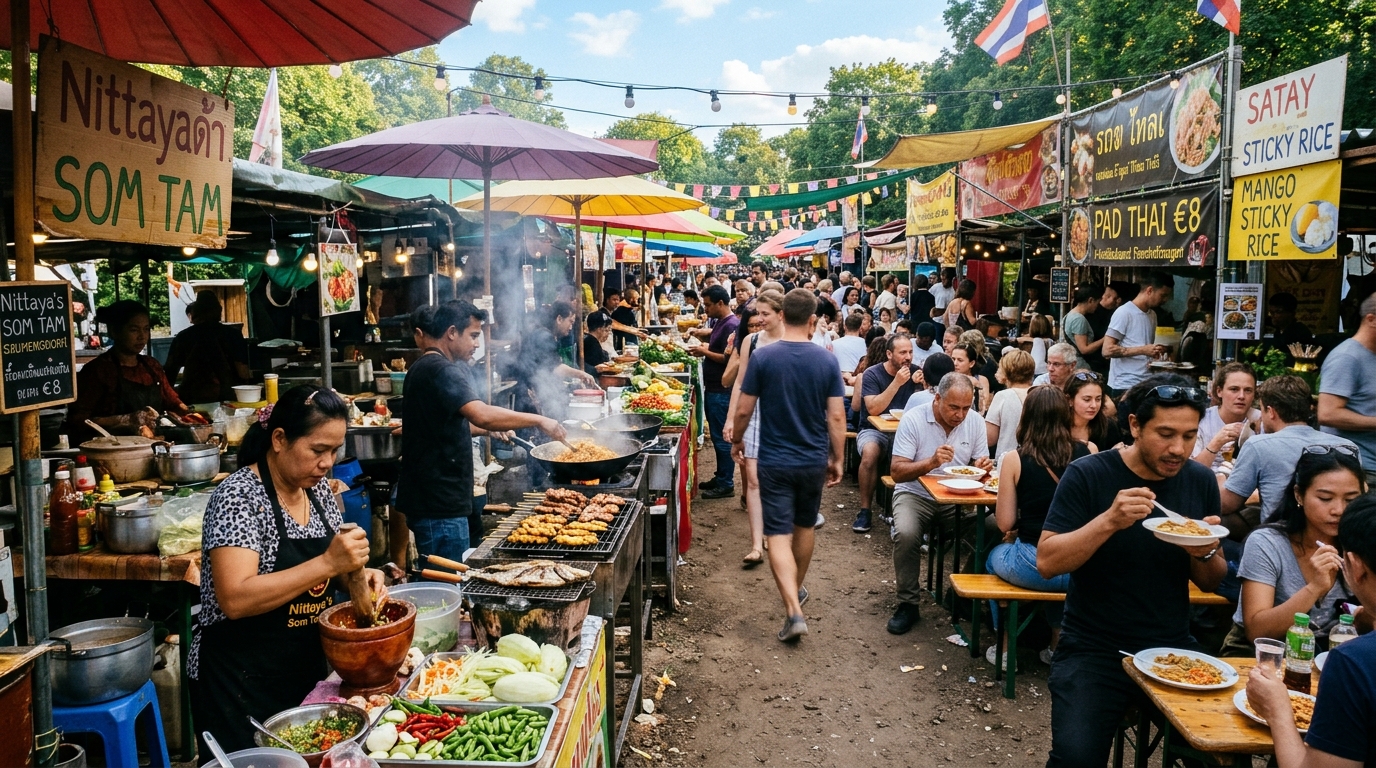
You have arrived at Thaipark—officially known as the Thai Street Food Market, and affectionately called the Thaiwiese (Thai Meadow) by longtime Berliners. What began over thirty years ago as an informal Sunday gathering for homesick Thai families has matured into one of Europe's most authentic, energetic, and celebrated Southeast Asian street food hubs.
The Origins: Sunday Picnics and the Accidental Culinary Institution
The story of Thaipark is one of genuine grassroots cultural serendipity. In the early 1990s, following German reunification, a growing community of Thai women living across West Berlin began meeting on weekends in Preußenpark. They came to socialize, speak Thai, play cards, and share nostalgic home-cooked dishes from their home provinces—from the fiery, herb-laden salads of Isan in the northeast to the rich, coconut-based curries of central and southern Thailand.
Originally, there was no commercial ambition. Families sat on bright woven mats under beach umbrellas, spreading out stainless steel tiffin carriers, portable charcoal braziers, and plastic cooler boxes. But as neighborhood residents strolled through Preußenpark, captivated by the searing aromas of lemongrass and Thai basil, they began asking if they could buy a plate. Hand-lettered cardboard signs appeared: "Pad Thai 3 DM," "Som Tam 4 DM."
Word spread by mouth across Berlin's creative circles, university dorms, and expat communities. By the mid-2000s, what started as a dozen families on blankets had expanded into an unmissable weekend spectacle with over sixty home cooks dishing out regional delicacies to thousands of hungry food lovers every Saturday and Sunday.
What to Eat: A Deep Culinary Field Guide
Navigating Thaipark is a sensory delight. While classic Pad Thai and crispy spring rolls are everywhere, the real magic lies in seeking out traditional regional specialties prepared right in front of you:
- Som Tam (Green Papaya Salad): The beating heart of the market. Watch the cooks shred unripe green papaya into deep clay mortars, violently bruising bird’s eye chilies, fresh garlic cloves, dried shrimp, long beans, cherry tomatoes, fish sauce, and palm sugar. You will be asked: "Eins, zwei, oder drei Chilis?" If you value your tastebuds, start with one; three is authentic Isan-level fire.
- Moo Krob (Crisp-Crackling Pork Belly): Golden-fried pork belly with blistered, airy skin and tender, melt-in-your-mouth meat. Vendors chop it with heavy cleavers on wooden rounds and serve it over jasmine rice with cucumbers and pungent nam jim jaew (toasted chili dipping sauce).
- Khanom Krok (Coconut Rice Dumplings): One of the market’s premier dessert treasures. Cooked in cast-iron dimple pans over gas burners, these two-layered custard cakes feature a crispy, slightly salty outer rice shell filled with warm, molten coconut cream, often garnished with sweet corn or spring onion.
- Khao Niao Mamuang (Mango Sticky Rice): Glutinous sticky rice infused with salted coconut milk, paired with sweet, freshly sliced ripe Thai mangoes and sprinkled with toasted mung beans.
To wash it all down, grab a young green coconut skillfully hacked open with a machete, or order a cup of vibrant orange Cha Yen (Thai iced tea with condensed milk), crushed over shaved ice.
Arrive between 11:30 AM and 12:15 PM on a sunny Sunday. The market gets swamped by 1:30 PM, with lengthy queues forming at the premier som tam and grilled satay stalls. Always carry physical cash—nearly all vendors operate cash-only. After eating, cross Brandenburgische Straße to the square directly outside Fehrbelliner Platz U-Bahn station to explore the legendary weekend art and flea market (Flohmarkt am Fehrbelliner Platz).
The Modern Evolution: Paved Promenades and Environmental Balance
Thaipark's phenomenal popularity eventually posed significant urban planning challenges. Decades of heavy foot traffic, charcoal disposal, and waste severely eroded Preußenpark's grassy lawns, sparking friction with local municipal authorities in Charlottenburg-Wilmersdorf.
Rather than banning the beloved cultural treasure, the district government, Thai community leaders, and the Thaipark e.V. association collaborated on an intelligent compromise. Between 2021 and 2024, the market was restructured and relocated from the delicate grass meadow to the wide, paved pedestrian promenade along Württembergische Straße (directly adjacent to the park and behind Parkcafé).
The modernization introduced professionalized market pavilions, dedicated electrical hookups, tap water access, and strict reusable container systems (Mehrweggeschirr) to eliminate single-use plastic waste. Crucially, the move preserved the authentic, familial warmth that makes Thaipark legendary: the same matriarchs and master cooks still rule the burners, chatting with regulars and serving extraordinary home-cooked food under colorful awnings.
Location & Visitor Logistics
Visiting Thaipark (Preußenpark Street Food Market)
- Location: Württembergische Straße / Preußenpark, 10707 Berlin-Wilmersdorf.
- Transit: U-Bahn station Fehrbelliner Platz (Lines U3 and U7), Exit Brandenburgische Straße / Preußenpark. Less than a 2-minute walk.
- Season & Hours: Operates seasonally from April through October. Open Saturdays and Sundays from 11:00 AM to approximately 8:00 PM (weather permitting; outdoor stalls close during heavy rain).
- Admission: Free entry. Individual dishes typically cost between €4 and €10.
- Payment Method: Cash is essential. Very few stalls accept electronic payments.
- Waste Deposit: Many stalls utilize reusable bowls and glasses with a small deposit (Pfand), refundable upon return.


Comments
Post a Comment