Inside Holzmarkt 25: How Berlin’s Wildest Riverbank Rebels Built a Creative Village on the Spree
From the Wild Confetti of Bar 25 to the Mediaspree Battle
To understand how Holzmarkt exists today, you have to rewind to 2004. During the Cold War, this riverfront plot was part of the heavily guarded "death strip" of the Berlin Wall. After the wall fell, the parcel sat as a muddy, overgrown wasteland owned by Berlin's municipal waste management authority (BSR).
A collective of bohemian nightlife pioneers—including Juval Dieziger, Christoph Klenzendorf, Steffi Lotta, and Danny Faber—leased the vacant lot, dragged in an old GDR camper van, cobbled together scrap lumber, and founded Bar 25. What started as an unauthorized riverside shack evolved into one of the most legendary open-air techno clubs on the planet. For six hedonistic years, Bar 25 hosted legendary 72-hour marathon weekend parties where circus performers, international DJs, and wandering dreamers danced under weeping willow trees beside the water.
By 2008, the City of Berlin launched the ambitious Mediaspree development plan, intending to auction off public riverbanks to multinational media conglomerates and luxury condo developers. Despite massive public demonstrations under the slogan "Spreeufer für alle!" (Spree riverbank for everyone) and a historic municipal referendum, Bar 25 was forced to close in September 2010 after a five-day nonstop farewell marathon.
The Swiss Miracle: Stiftung Abendrot to the Rescue
Most Berlin club stories end right there: bulldozers arrive, glass towers rise, and counterculture relocates to the city fringe. But the Bar 25 collective—often dubbed Berlin’s savviest "business hippies"—refused to surrender. After running an interim venue called Kater Holzig in a derelict soap factory across the river, they learned that corporate investment plans for the Holzmarkt plot had collapsed during the 2011 financial chill.
The plot went back to public auction. The collective formed a cooperative and searched Europe for an ethical investment partner who shared their vision of non-commercial public space. They found their savior in Stiftung Abendrot, a progressive, sustainability-focused Swiss pension fund founded by environmentalists and labor unions.
Stiftung Abendrot bought the 18,000-square-meter riverfront property for over €10 million, effectively boxing out vulture funds and luxury condo builders. In a landmark cooperative agreement, Abendrot granted the Holzmarkt cooperative a 75-year hereditary lease (Erbbaurecht). The agreement ensured the land could never be converted into luxury apartments or speculative corporate offices; it had to remain dedicated to public access, culture, gastronomy, and small creative businesses.
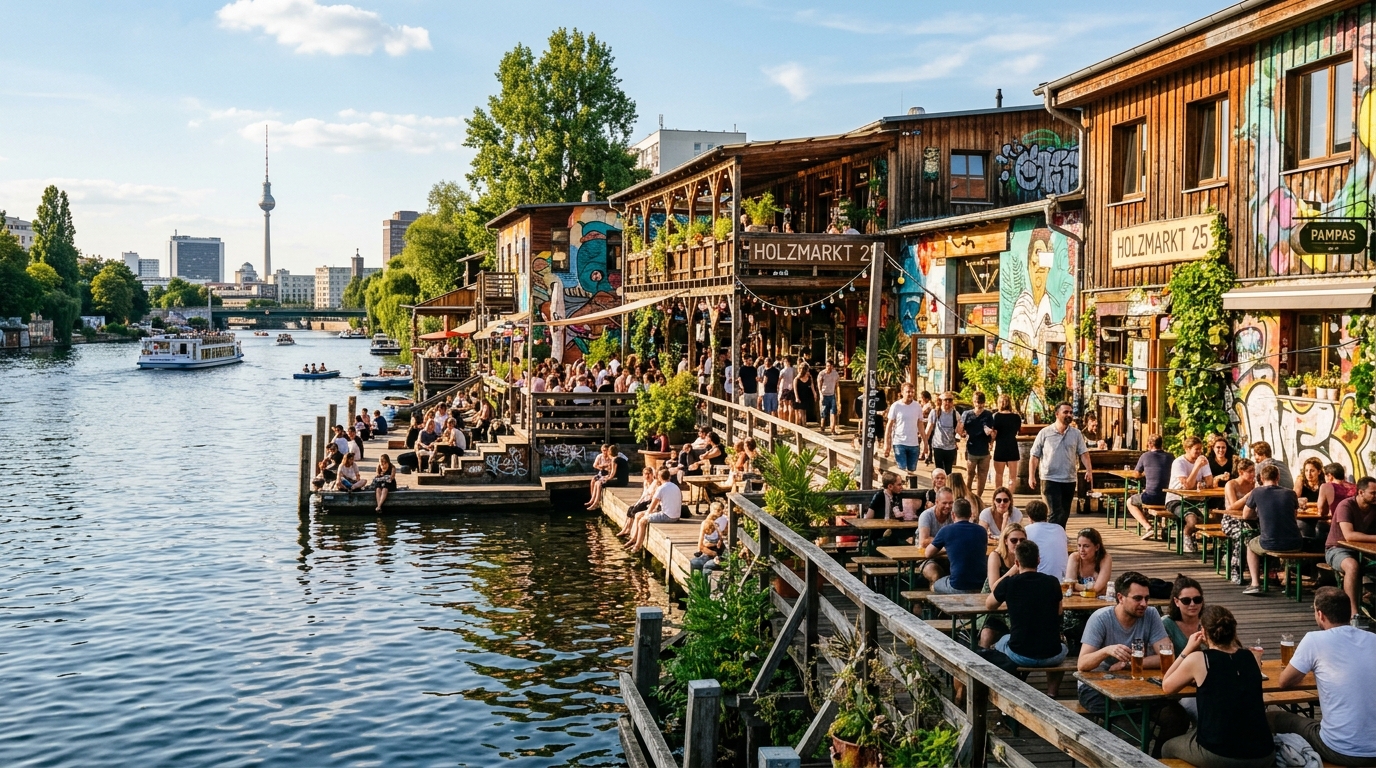
The Holzmarkt 25 village grounds are free and open to the public daily—you do not need a club ticket or restaurant reservation to walk in, explore the art, or sit by the river. For the best experience, grab a freshly baked cardamon bun from Die Backpfeife bakery around 4:00 PM, head to the wooden river amphitheater with a cold craft beer from the Spreequell kiosk, and watch the excursion boats drift past as the sun sinks behind the Berlin TV Tower.
What to Experience Inside the Village
Officially opened in 2017, Holzmarkt is a living, breathing micro-neighborhood that buzzes from morning coffee to the wee hours:
- Die Backpfeife: An artisanal sourdough bakery and cafe milling organic regional flour on site. Their crusty sourdough loaves, buttery croissants, and cinnamon-cardamom knots are among the best in Friedrichshain.
- Restaurant Katerschmaus: An elevated riverside dining room perched directly above the Spree water level, serving seasonal regional German cuisine, fresh river fish, and biodynamic natural wines in an intimate, wood-paneled salon.
- The Creative Ecosystem: Holzmarkt hosts a community recording studio, an organic children's daycare (Kita), woodworking shops, co-working spaces, and the Säälchen—a versatile timber performance hall hosting indie theater, concerts, and flea markets.
- Kater Blau: On weekends, the spirit of Bar 25 roars back to life. Kater Blau is the cooperative’s legendary club, featuring two intimate dancefloors (Heinz Hopper and Acid Bogen), an outdoor wooden ship deck on the Spree (the Agnes), and house/techno lineups that run uninterrupted from Friday night through Monday morning.
Actionable Logistics: Planning Your Visit
Everything you need to know when heading to Holzmarkt:
- Address: Holzmarktstraße 25, 10243 Berlin (Friedrichshain-Kreuzberg).
- Getting There: Walk five minutes east from S/U-Bahnhof Jannowitzbrücke (U8, S3, S5, S7, S9) or seven minutes west from S-Bahnhof Ostbahnhof.
- Opening Hours: The public village grounds open daily from 10:00 AM until late evening. Individual shops, wine bars, and food stalls maintain varying schedules (bakery open mornings; restaurants and bars peak afternoon through night).
- Payment: Most established food venues like Katerschmaus and the bakery accept card and contactless payments, but smaller outdoor pop-up kiosks and beer stands often prefer cash. Keep small euros on hand.


Comments
Post a Comment