A Local's Guide to Tresor: The Pillar of Berlin's Techno Scene
A Local's Guide to Tresor: The Pillar of Berlin's Techno Scene
Berlin isn't just about the towering historical monuments and Cold War history; it is universally recognized as the undisputed techno capital of the world. Whether you're an expat settling into your new life or a young traveler seeking the ultimate party, the city's nightlife is an unparalleled, transformative experience. And frankly, no serious discussion of Berlin's electronic music culture is complete without a deep dive into the legendary institution known as Tresor. More than just a nightclub, Tresor is a foundational pillar of modern music history.
From an Abandoned Vault to a Global Movement
The story of Tresor (the German word for "vault" or "safe") is intrinsically tied to the fall of the Berlin Wall in 1989. In the chaotic, euphoric, and rapidly transforming landscape of a newly reunified city, young people from the East and West sought a common language to bridge their divided pasts. Club founder Dimitri Hegemann officially opened Tresor on March 13, 1991. The location was as symbolic as it was atmospheric: an abandoned basement vault in a former Wertheim department store on Leipziger Strasse near the former border. This dark, raw, and heavily industrial space quickly became the epicenter of a cultural revolution.
Crucially, Tresor played a pivotal role in establishing the legendary cultural bridge between Berlin and Detroit—the birthplace of techno. When Tresor Records launched in 1991, its very first release was "Sonic Destroyer" by X-101, a project involving Detroit pioneers Mike Banks, Jeff Mills, and Robert Hood (the core members of the Underground Resistance collective). Tresor provided these groundbreaking Detroit artists with a platform and a passionate audience that embraced their futuristic, machine-driven sound. In return, the Detroit pioneers provided the reunited Berlin scene with its definitive, uncompromising soundtrack.
The Industrial Power Plant Era
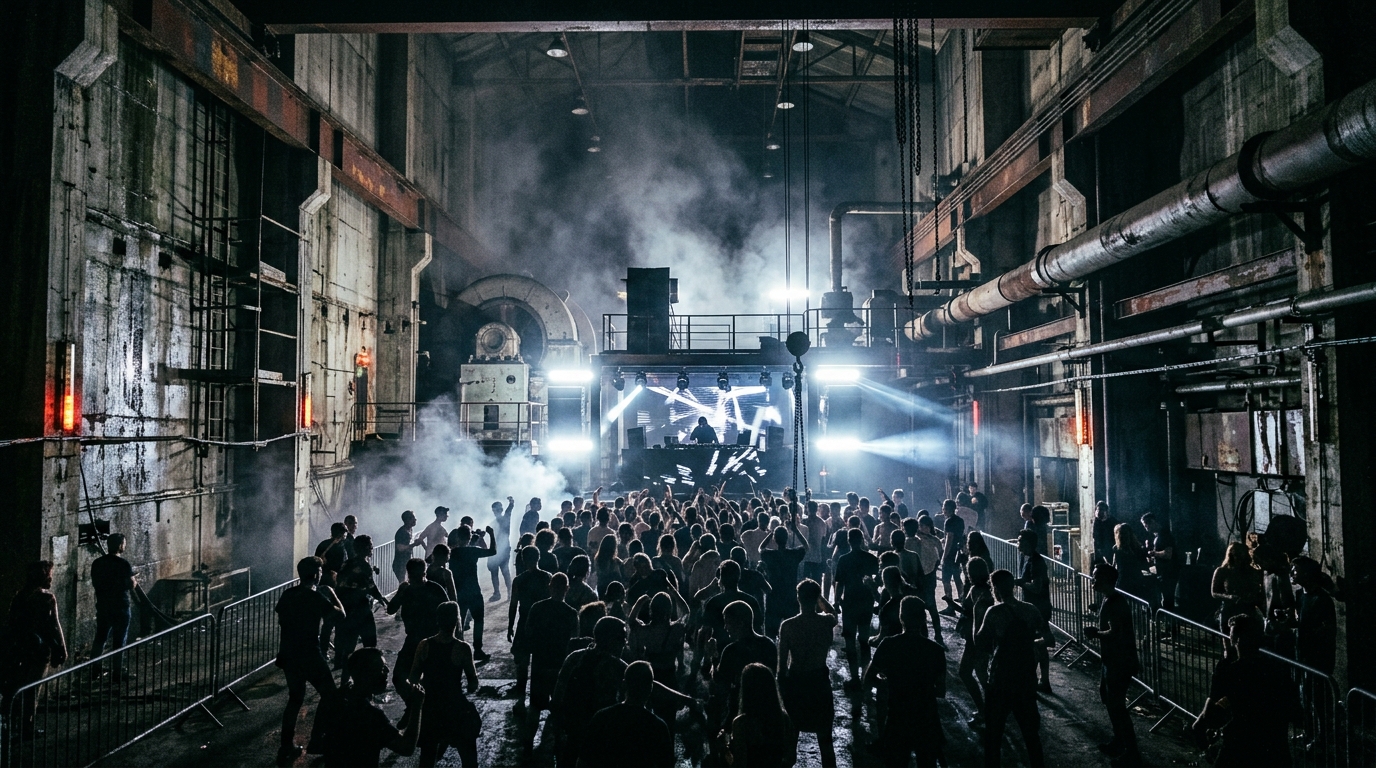
The original Leipziger Strasse vault closed its doors in 2005 due to urban redevelopment, but the spirit of Tresor refused to die. In May 2007, the club triumphantly relocated to its current, awe-inspiring home: a massive, 22,000-square-meter decommissioned heating power plant (Heizkraftwerk Berlin-Mitte) on Köpenicker Straße. This colossal industrial complex perfectly preserves the raw, unfinished aesthetic of the 90s, featuring labyrinthine corridors, towering concrete walls, and an atmosphere thick with history.
Today, the club typically operates with three distinct floors. The namesake "Tresor" floor, located deep in the basement, is famous for its relentless, hard-hitting techno, blinding strobe lights, and impossibly dense artificial fog. Upstairs, the "Globus" floor offers a slightly warmer vibe, generally featuring house music and more experimental electronic sounds. Later additions, such as the +4Bar, provide alternative acoustic experiences for clubgoers seeking a different sonic focus.
Actionable Takeaways for the Night Out
Address: Köpenicker Str. 70, 10179 Berlin, Germany
When planning your visit, keep in mind that Berlin's club culture values respect, community, and an open mind. Compared to other notoriously exclusive venues like Berghain, Tresor's door policy is often considered slightly more accessible. However, the bouncers still maintain high standards to protect the vibe inside; they reject all forms of discrimination and seek guests who truly appreciate the music. Dress comfortably, be prepared for a long night that will easily stretch into the next morning, and don't forget to grab a late-night Currywurst on your way home. Stay energetic, stay curious, and see you on the dance floor!


Comments
Post a Comment