November Nights at Silent Green: How Berlin's 1912 Crematorium Hosts Autumn Sound, Science, and Film Festivals
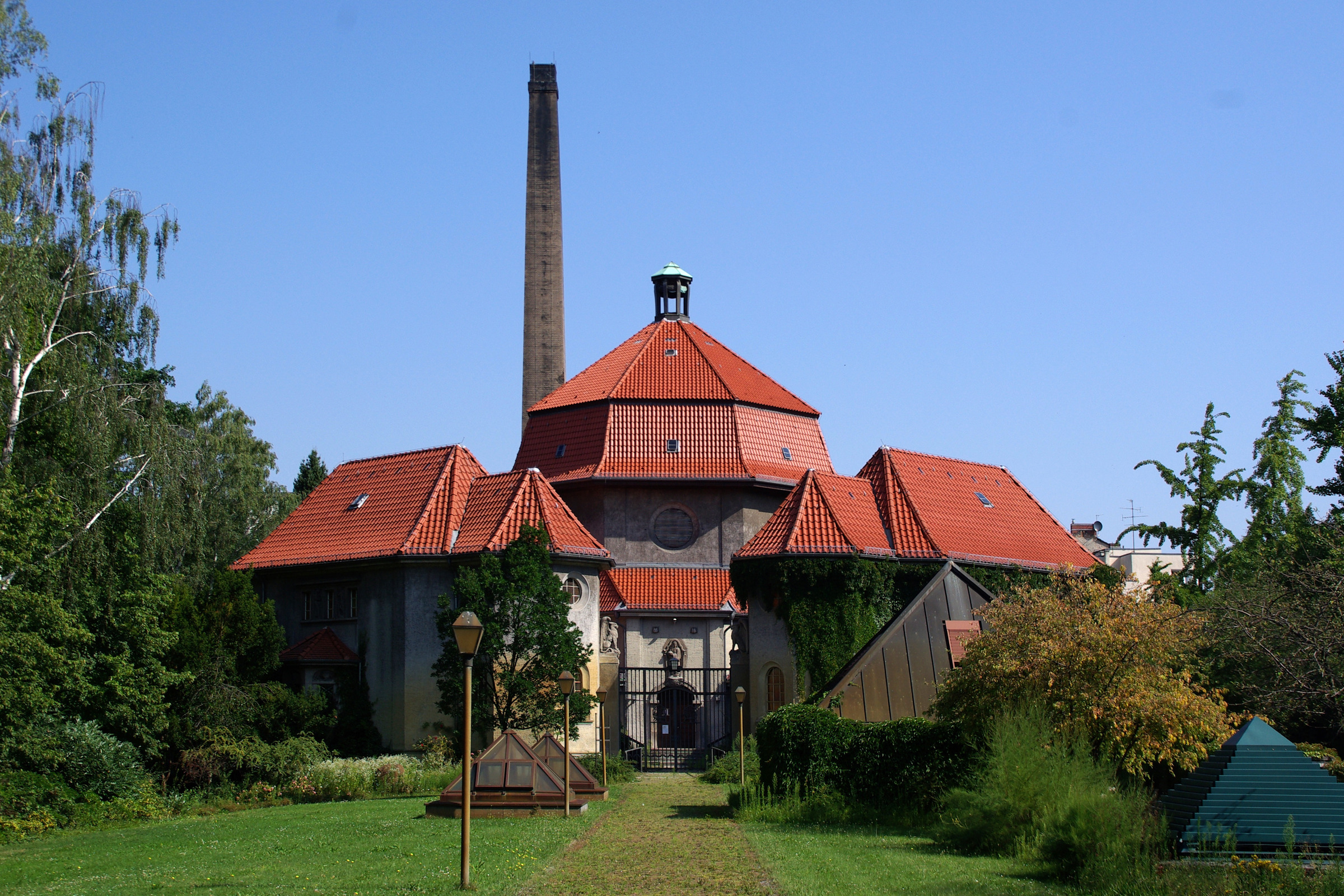
By mid-November, Berlin drops the curtain on rooftop sunrises and canal-side picnics, settling into the long gray stretch locals affectionately call Dunkelzeit. Before you retreat into your apartment with a radiator and a streaming queue, walk ten minutes north of Wedding's S-Bahn tracks down Gerichtstraße, pass beneath a stone archway lined with autumn plane trees, and step onto the lawn of silent green Kulturquartier. Inside a former 1912 crematorium—complete with an octagonal terracotta dome and an underground concrete bunker—November is Berlin's sharpest season for experimental sound, short cinema, and late-night cultural curiosity.
Right now in mid-November 2026, the city's autumn festival calendar is firing on all cylinders. Fresh off the heels of Berlin Science Week (November 1–10) and overlapping the closing nights of the 42nd interfilm Berlin International Short Film Festival (November 10–15), silent green's subterranean Betonhalle is hosting the 7th edition of the Tehran Contemporary Sounds Festival (November 13–15, 2026), packing audiovisual performances, sound art, and panel talks into a space originally engineered for silence and remembrance.
How Berlin's First Crematorium Became an Avant-Garde Campus
You do not stumble onto a building like silent green by accident; every brick carries a century of Berlin's stubborn streak. In the late nineteenth century, Prussia strictly outlawed cremation under church pressure, forcing secular freethinkers who wanted ashes instead of graves to haul coffins across state lines. Anticipating a legal breakthrough, Berlin commissioned architect William Müller—a student of legendary department-store architect Alfred Messel—to design a monumental neoclassical complex on Gerichtstraße between 1909 and 1910.
Because cremation was still technically illegal while Müller drew the blueprints, the site opened officially as a modest "urn hall" while Müller quietly future-proofed the foundations, elevator shafts, and towering brick chimney for furnaces. When Prussia finally legalized cremation in 1911, Siemens installed the ovens, and the Wedding Crematorium held its first official cremations in November 1912—making it the very first crematorium in Berlin and only the third in Prussia. Müller's collaborator Hermann Jansen expanded the grounds and colonnades between 1913 and 1915, tucking the octagonal complex beside a quiet municipal urn cemetery.
Decommissioned in 2002 after nearly a century of service, the protected heritage site sat empty until 2013, when cultural producers Bettina Ellerkamp and Jörg Heitmann acquired and restored it into an independent arts campus. Today, the former mortuary wings house music labels like !K7 Records, the Arsenal film and video art archive, and transmediale studio spaces, while the public gathers in two rooms whose acoustics no modern club can replicate.
Inside the Kuppelhalle and the Subterranean Betonhalle
Start above ground in the Kuppelhalle—the 17-meter-tall octagonal mourning hall beneath the red-tiled cupola. Because early crematorium advocates came from secular, humanist movements, Müller stripped out traditional church iconography and replaced it with clean geometry, subtle natural daylight from high clerestory windows, and a tiny mosaic snake curled into the terrazzo floor. Today, those rounded masonry walls turn chamber strings, solo piano, electro-acoustic electronics, and spoken-word readings into something astonishingly intimate—closer to sitting inside a wooden cello than attending a downtown concert hall.
Then descend beneath the courtyard lawn into the Betonhalle. Completed in 2019 as a bold modern counterpoint to the 1910 stonework, this raw, 1,600-to-1,800-square-meter underground concrete hall looks like a Brutalist submarine pen built for experimental art. During November festivals like Tehran Contemporary Sounds or autumn Berlin Science Week installations, projection mapping, spatial audio arrays, and modular synthesizers reverberate across bare concrete pillars while chilly November drizzle falls silently on the grass ten feet overhead.
Even if a weekend Betonhalle concert sells out, silent green's grounds and its in-house restaurant, MARS | Café & Bar, are open to walk-ins all autumn. Duck into MARS on a gray afternoon for seasonal hot lunch or weekend brunch (10:00 AM–2:30 PM Saturdays and Sundays), grab a late-afternoon filter coffee from Little MARS next to the historic courtyard colonnade, and then follow the leafy Panke River trail ten minutes northeast to Uferhallen (Uferstraße 8–11)—a sprawling 1920s BVG tram depot turned working artist studio complex where open-studio exhibitions and indie gigs pop up throughout November.
Why November Is Wedding's Best Cultural Walking Quarter
Berlin's summer reputation belongs to Kreuzberg canals and Neukölln rooftops—places we covered in our 48-hour U-Bahn neighborhood guide and Klunkerkranich rooftop guide. Once November wind strips the birch leaves along the Panke, though, the cultural center of gravity shifts indoors to north-central Wedding.
You can easily string together an entire car-free autumn afternoon around Gerichtstraße without buying a single holiday market mug. Start with a screening at one of interfilm Berlin's partner arthouse cinemas (or catch Arsenal's experimental film screenings), walk along the sunken Panke path between old red-brick factory courtyards and Uferhallen's tram sheds, and finish back at silent green for dinner at MARS (5:30 PM–8:30 PM Monday through Saturday) before an evening set under the Kuppelhalle dome.
Visitor Logistics & Transit Tips
silent green Kulturquartier: Gerichtstraße 35, 13347 Berlin (Wedding). Public Transit: Take the Ringbahn (S41 / S42) or U6 to S+U Wedding (5-minute walk down Reinickendorfer Straße and Gerichtstraße), or ride Bus 120 directly to Gerichtstraße or M27 / 247 to Nettelbeckplatz/S-Wedding. Hours: Grounds open daily; MARS Café & Bar serves weekday lunch (12:00 PM–3:00 PM), daily café/cake at Little MARS (12:00 PM–5:30 PM), Mon–Sat dinner (5:30 PM–8:30 PM, drinks until 9:30 PM), and weekend brunch (10:00 AM–2:30 PM). Kuppelhalle and Betonhalle access follows scheduled concert and festival hours—check the event calendar and book tickets online ahead of November festival nights. View on Google Maps.


Comments
Post a Comment